Parlor Songs of Pittsburgh: "Luna (A Love Song to the Moon)"
I love the moon. Its mystique, charm, romance….and power. It took me a while to truly grasp that the moon controls the tides of the seas, and I’ve recently learned that the phases of the moon correspond with female hormone cycles. The moon is undeniably feminine. And the fascination with the moon is age-old. That fascination arguably reached a peak at the turn of the 20th century. The “paper moon” was a common photo backdrop at carnivals for portraits of couples and others. A plethora of songs were written about the moon as well. Amusement parks dubbed “Luna Park” popped up all over the world (notably in Pittsburgh as well)! Maureen Buja does a fantastic job on the blog Interlude giving some lunar context, and also listing out several tunes that capitalize on the topical trend. You can read her post here. (1)
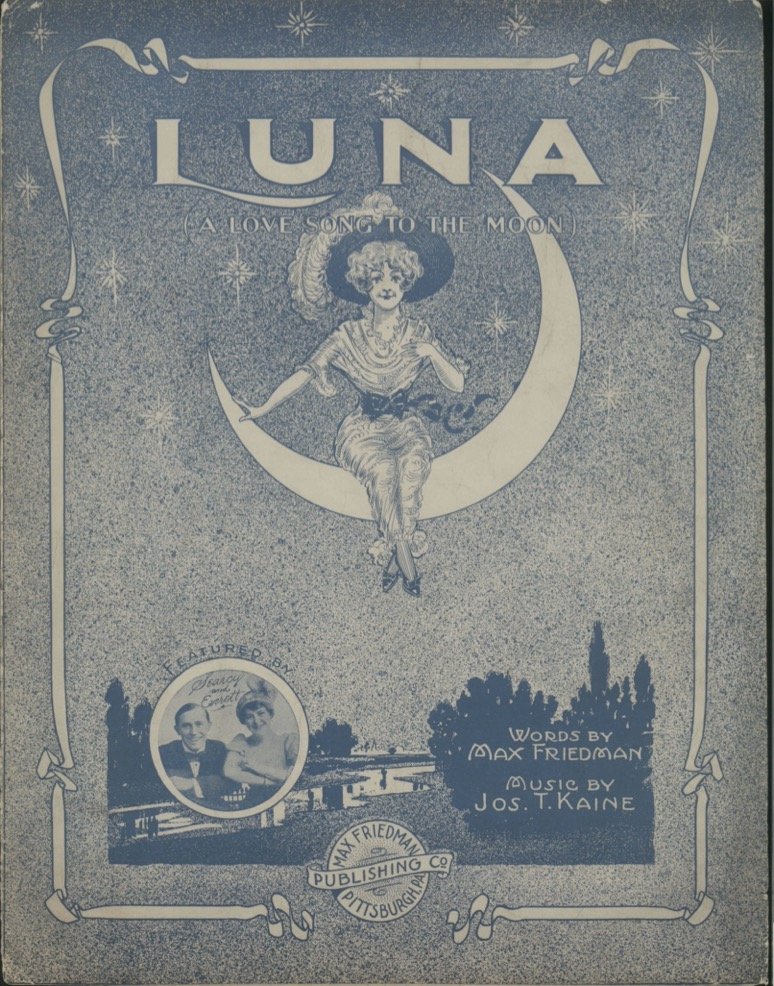
When I happened upon this title listed in the Pittsburgh Sheet Music Collection, I knew I had to dig it out of the archives. Partially, I had to satisfy my own curiosity. I’m usually pulling titles that I know are a direct reflection of local history. Songs with a Pittsburgh colloquialism or regional landmark right in the title, like "In the Valley Where the Allegheny Flows” or “Pittsburg: City of Smoke” have caught my attention previously. This tune, with little to landmark it as quintessentially “Pittsburgh” proved to have jewels of local history between the staff lines.
It immediately struck me that this song was self-published, and also on the year that copyright law went into effect. The law ensured intellectual property law protecting composers, librettists, and publishers. Since the tune is self-published by the librettist, I decided to start my investigation there.
The librettist is Max Friedman, and from all accounts he had quite the full career. He was a veteran of the Great War, and although I haven’t been able to find records for his entrance into the service, I believe I am safe to assume that he published this tune prior to the his time in the service. His most popular tunes revolved around WWI. Titles like “Like a Baby Need Its Mother That’s How Uncle Sam Needs You” (1917) and “Our Own American Boy” (1918) were wartime hits, and “Give That Job to the Gob and the Doughboy” (1919) detailed the plight of American veterans. Friedman was clearly not shy to hold up a mirror to the culture in his songs, as is the paradigm of parlor song. Another paradigm of parlor song, is that most of these songwriters had other means of making a living. Friedman was certainly no exception. For years, across the airwaves on radio broadcasts, he was known as Ukulele Max. Interestingly enough, many parlor songs include ukulele tabs alongside the piano and vocal line as the instrument soared into popularity during Tin Pan Alley’s heyday. Furthermore, it was a fairly accessible instrument for amateurs to learn! Friedman also had a jewelry business in Ohio, providing substantially for his family. He was involved in local barbershop quartets as well. He passed in 1964 in the East End of Pittsburgh, survived by his widow, three children, and nine grandchildren. (3)
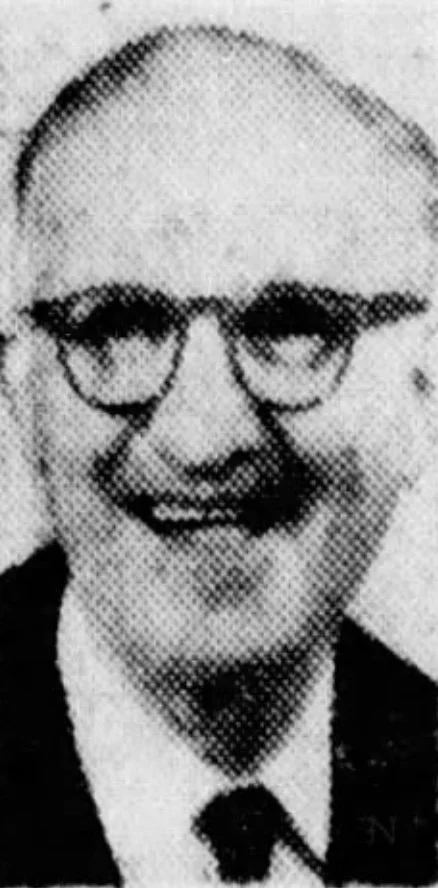
Max Friedman
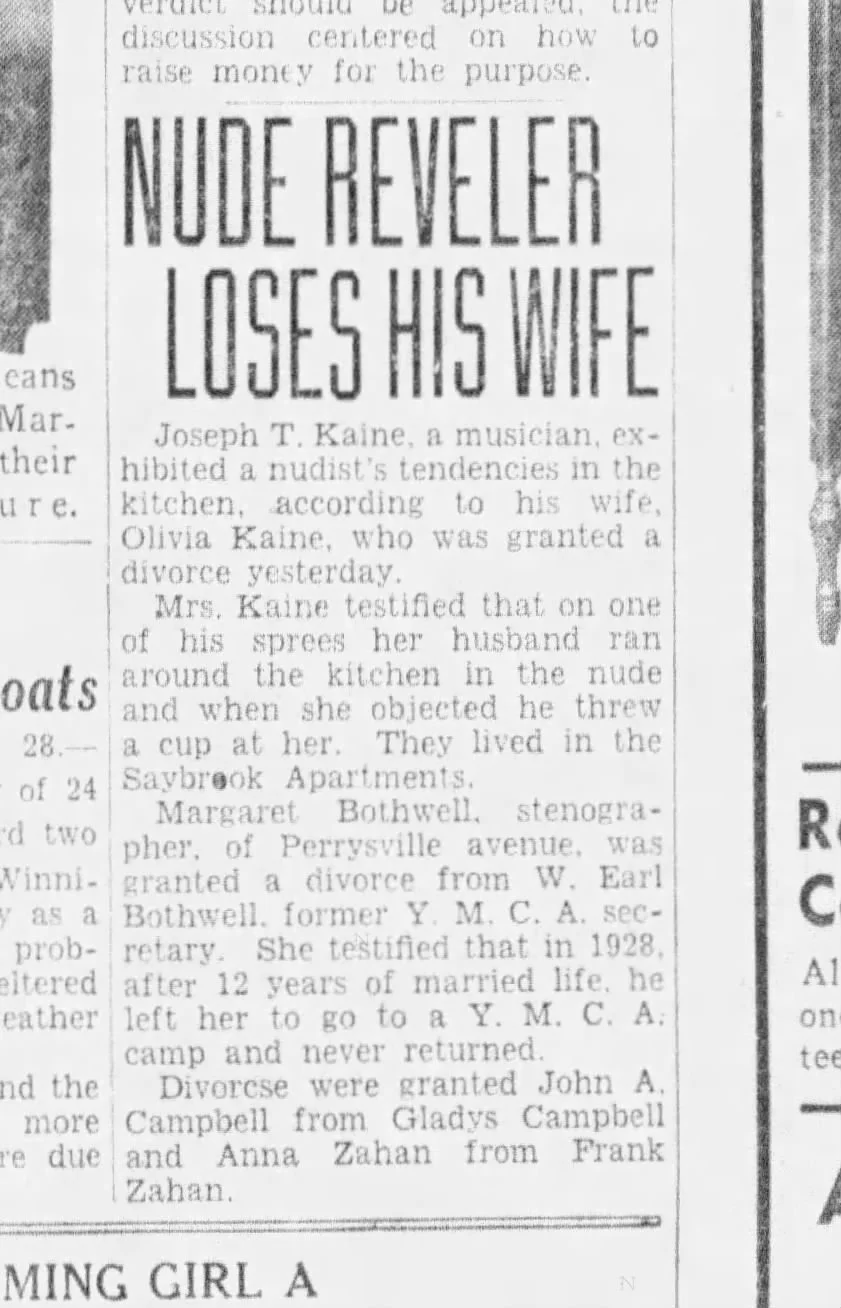
By all accounts I have found, the composer of this song has a much less wholesome background. Often, Jos. T. Kaine composed music for vaudeville and minstrel acts in Pittsburgh, and he made his full time wages this way. Most unflatteringly, he made newspaper headlines for his messy divorce (2) and losing his wallet. You can view the headline about his divorce below, and I think that seems to speak for itself quite enough.
We’re still not done with the “who’s who” of this song. Oftentimes, parlor songs would feature vaudeville artists on the covers if they had performed the tune. I was excited to see that “Luna” did feature a duo: Searcy and Everett. Stella Everett and Roy Searcy toured all around the midwest delivering vaudeville singing and dancing performances.
Now onto the song itself…it is utterly delightful. The melody playfully winds up and down in a little dreamy melodrama, and the lyrics while verging on farcical, poignantly tug at your heartstrings with languid longing. Enjoy!
https://interlude.hk/by-the-light-of-the-silvery-moon/#:~:text=The%20turn%20of%20the%2020th,them%20are%20still%20open%20today.
Pittsburgh Sun-Telegraph. (October 29, 1933). Jos. T. Kaine divorce. Newspapers.com. Retrieved December 30, 2025, from https://www.newspapers.com/article/pittsburgh-sun-telegraph-jos-t-kaine-d/184943107/
3. The Pittsburgh Press. (August 21, 1964). Friedman obit. Newspapers.com. Retrieved December 30, 2025, from https://www.newspapers.com/article/the-pittsburgh-press-friedman-obit/184940677/